Destination Websites Still Matter (Maybe More Than You Think)

A man typing on his laptop while drinking coffee.
by Patrick Rodgers
Director, Digital Product Design

It’s not an easy time to be a destination marketer or a destination website. We’re living through a moment of rapid-scale change in technology, user behavior and geopolitics simultaneously. The old playbook for reaching an audience is being rewritten in real time, but there seems to be a disconnect between reality and AI hype as it relates to whether websites still have value at the moment. 

Some corners of the industry are moving quickly to declare websites obsolete. The logic seems to be that if organic traffic is down YoY, then websites must be dying, so let’s hurry them off to the cemetery. It's as if 30 years of consumer internet evolution stopped mattering the moment content lost its crown. However, rushing into the “post-website” future may prove short-sighted, strategically speaking.

Volume vs. Quality

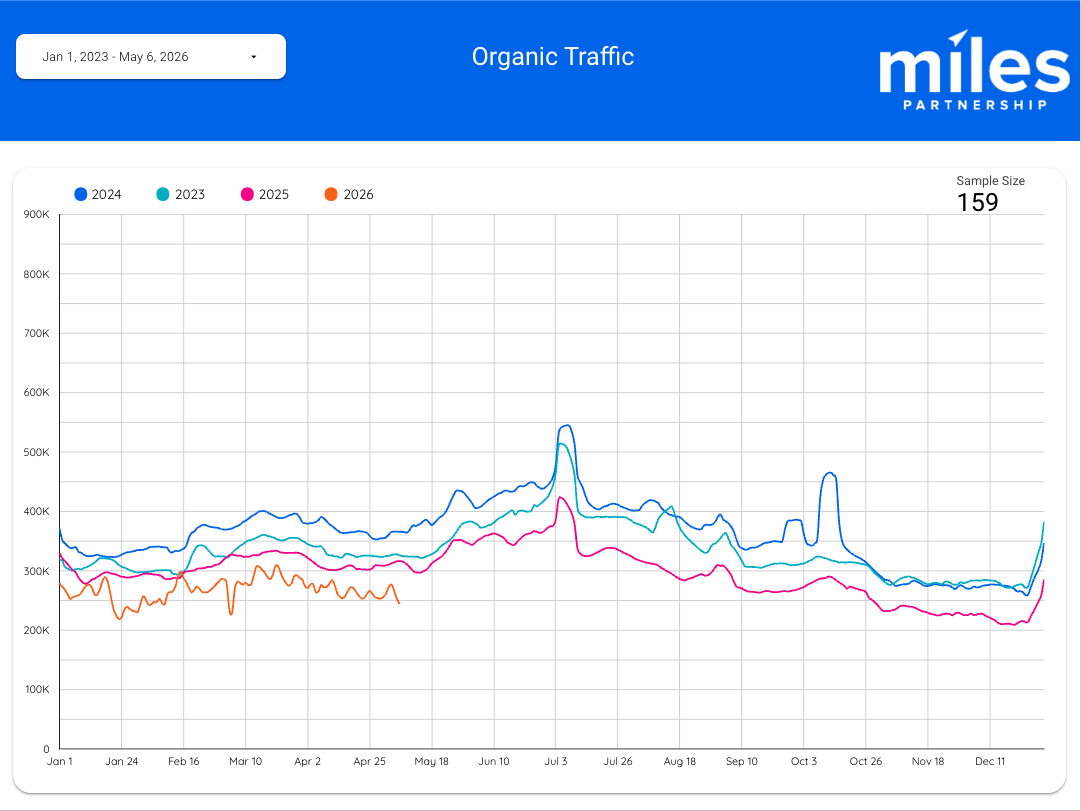
Organic traffic volume has dropped 10–25% across the industry (and beyond) as consumers use search engines less and AI more—but that’s not the whole story.

A graph showcasing the decline in organic traffic since 2023.

The drop in organic traffic and increasing AI usage compounds the losses that started a few years ago with zero-click search behavior, as well as social media platforms like Facebook sending less referral traffic to publisher sites. It’s a perfect storm that feels catastrophic (also, perhaps, a lesson about the importance of avoiding dependency on third-party platforms). All this change means publishers (not just DMOs) face an inflection point between the old methods of traffic generation and what new paradigm will emerge as the strategic framework for the future. But that’s not proof that authoritative websites are irrelevant. It might be the opposite. 

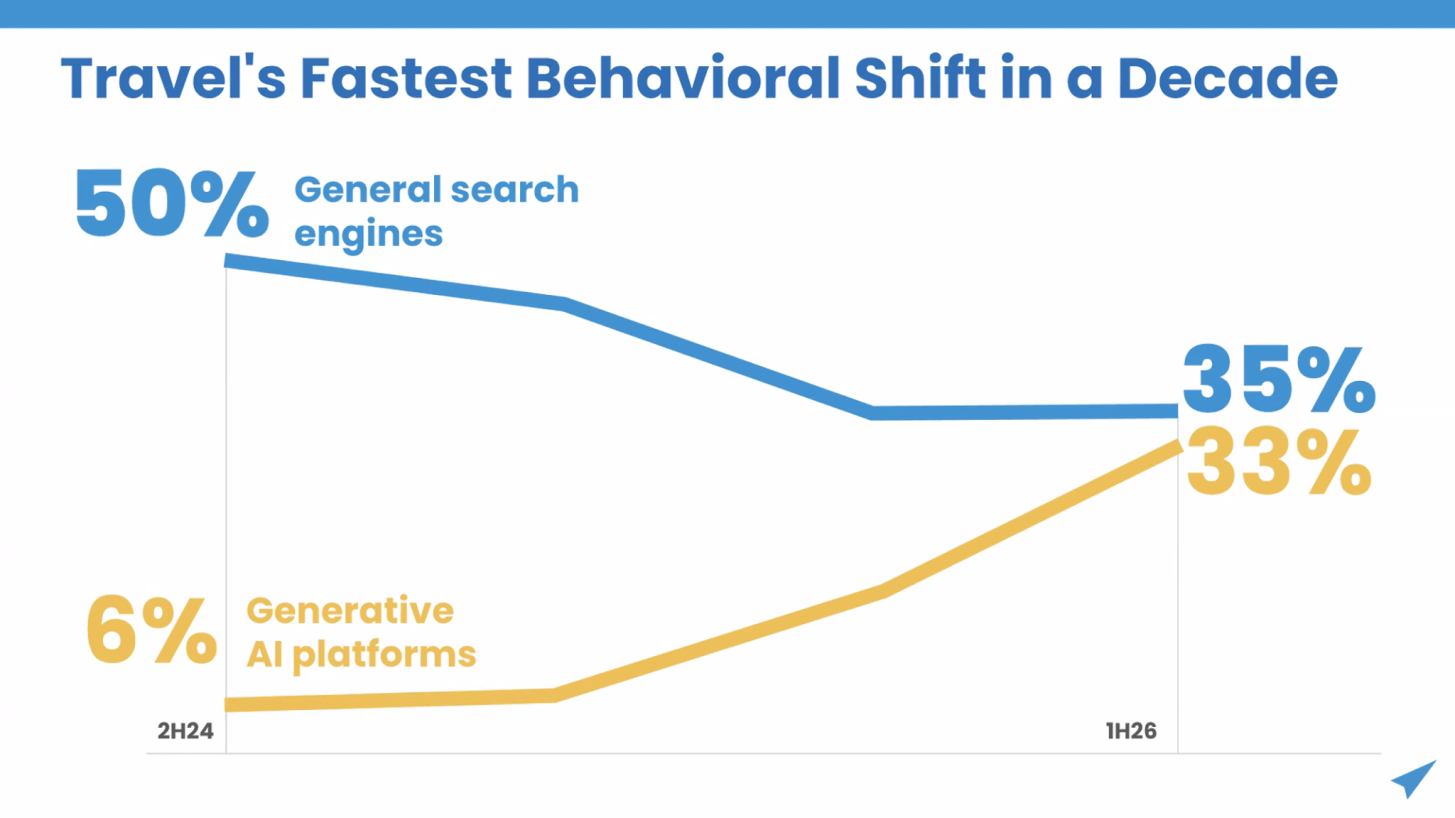
A line graph showcasing the decline of search engine queries compared to AI queries.

It's true that AI queries rarely send traffic back to the publisher's site, even as AI bots scrape that site's information at scale. Based on recent Cloudflare data, OpenAI references website content more than 1,600 times for every one human visitor it sends back to the source. For Anthropic, the ratio is more than 70,000:1. In the case of OpenAI, which is currently the most popular AI tool for U.S. consumers, that means every 1,000 website visitors you get from ChatGPT would mean your website provided more than 1.6 million people with valuable destination information.

What appears initially as a loss of traffic might look like a major problem if you’re only thinking about traffic volume, but there’s also a question of quality and intent. What if website traffic is down, but the website visitors you have are all very high-intent travelers who are more likely to stay a few extra days? What if traffic is down, but the information on your website is being seen by 1,000x more people thanks to AI interactions? Are those scenarios more or less valuable than the loss of a percentage of total annual website traffic below a historical peak? 

As a DMO, the mission is to inspire and educate consumers who will visit the destination. However, that might not always require direct interaction with your destination’s website in the age of AI. That’s not the same thing as your website losing its value. Volume alone isn’t the right metric.

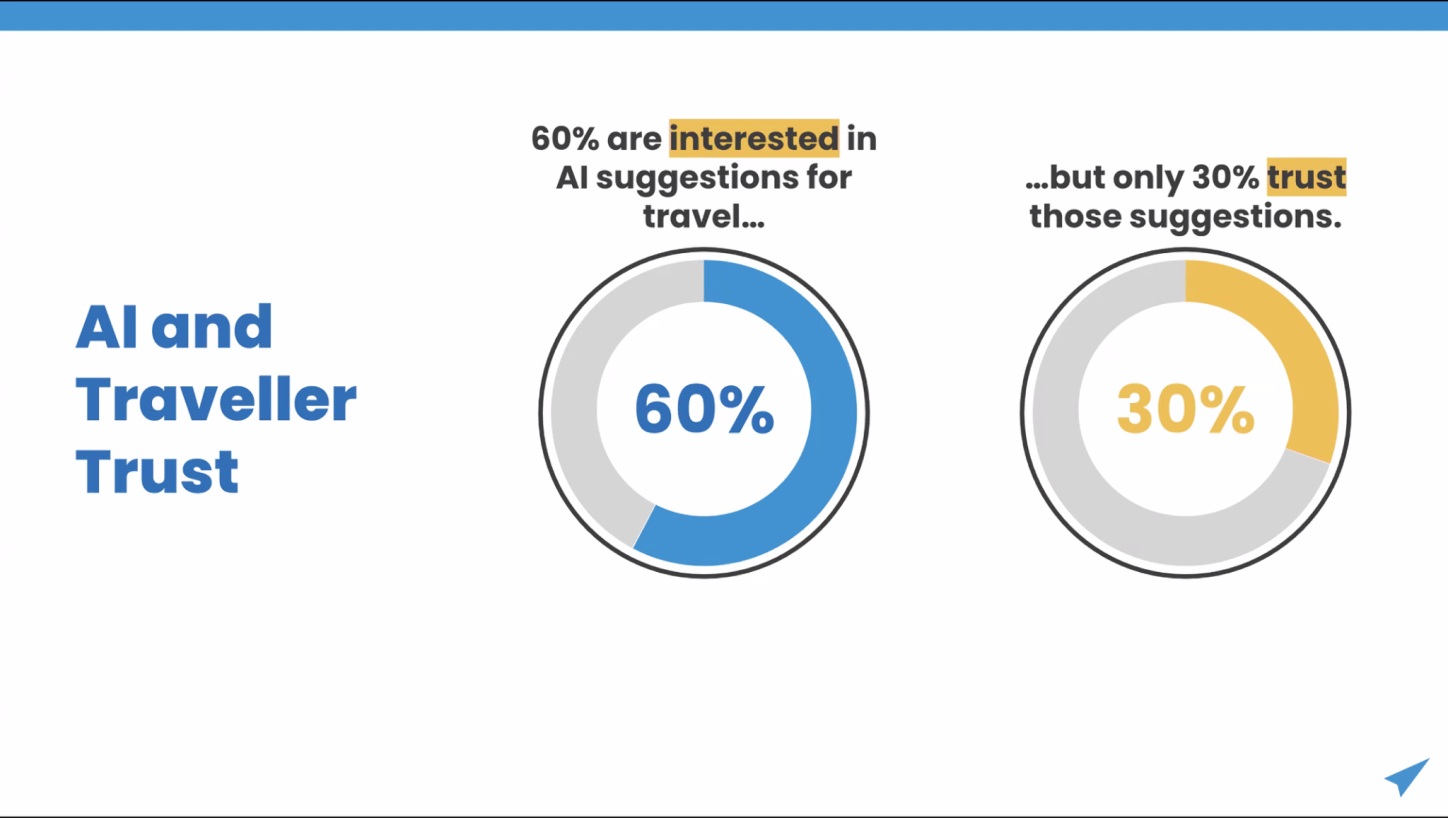
60% are interested in AI suggestions for travel, but only 30% trust those suggestions.

While more people are using AI as part of their travel planning process, that’s a lot different than ONLY using AI for travel planning. When you dig a little deeper, there are some obstacles in the way of an absolute adoption curve, including trust issues. The majority of consumers don’t completely trust the information they’re getting from AI without independent validation. 

The majority of consumers are still going online to research and book travel. The State of Artificial Intelligence in Travel report from Future Partners found that 62% of travelers rely on websites discovered via search when researching travel options. According to the report, “AI currently serves as an important complement to established research channels rather than a primary driver of trip decisions.” 

Where will travelers find authoritative info, if they aren't able to visit a well-managed destination website after chatting with AI?

What Only Your Website Can Do

Your website is the one place in this crazy world where you can control the narrative. It’s the only place where your team can curate images, experiences and recommendations that tell the story you want about the market you represent. What sources will AI reference for destination information if you don’t maintain an authoritative website presence? That might be a scary proposition. 

As traditional publishers have shut down or consolidated, the previous generation of bloggers creating digital content has been replaced by influencers whose business model doesn’t often include maintaining accurate information for destinations over time. Most of the few surviving travel publishers have put up paywalls on their content, and potential visitors probably won’t subscribe just for a list of unique dining experiences in your market. But visitors are likely to choose a destination where they can find lots of inspiring, high-quality information compared to one without it. So abandoning a helpful, accessible destination website in pursuit of an unfocused “post-website” future would more than likely benefit your competitors instead.

There’s a name for where this is headed. Janette Roush, Brand USA's Chief AI Officer, recently described it in Phocuswire as Destination-as-a-Service (DaaS). In that model, the DMO functions as a living knowledge base—feeding AI with the up-to-date, detailed content that travelers ultimately see. Whatever DaaS eventually looks like, it will be built on top of the content libraries DMOs maintain today. That makes your website less of a marketing channel and more of a strategic asset for whatever comes next.  

Where Websites Go From Here

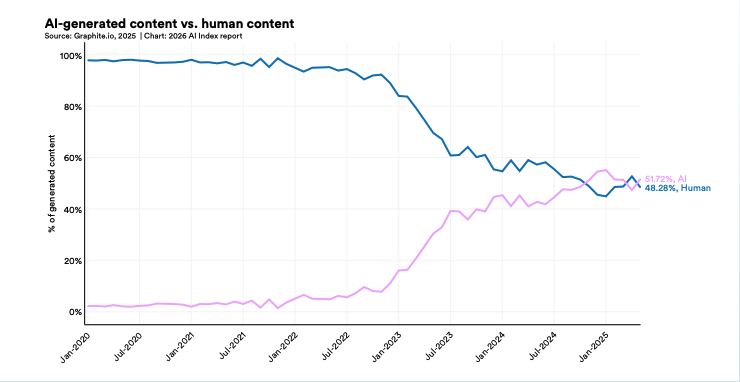
A graph showcasing the decline in human content and increase in AI-generated content.

Now is a time to invest in reimagining the ways you approach content online. We’ve already reached the point where more online content is being created by AI than humans, and a lot of it is slop. If anyone can spin up a generic summary in seconds, then real, granular detail becomes the differentiator, and that’s exactly where DMOs create an advantage. 

This moment of large-scale paradigm shift means that the “Top 10” lists from the peak content-marketing era aren’t as effective as they used to be at driving traffic. It turns out those are the things that AI can easily replicate. What’s more valuable right now is granular detail about your destination that makes it easier for visitors to have great experiences. 

What AI can’t do is actually visit your destination. It can’t tell anyone what it’s like to be there unless it picks that up from someone who knows. That is a unique value humans (including DMOs) bring to this new equation, so it’s time to lean into being real destination experts rather than just positioning a market’s brand as you wish it to be perceived. In the age of AI, it’s going to be harder to win visibility and traffic from spurious claims (the opposite of social video platform trends, it seems). 

The opportunity to enhance your website isn’t limited to a shift in content strategy. Since more than 60% of travelers are still visiting websites as part of their travel research and planning, considering the experience your website provides is more of a differentiator than ever to make your brand touchpoints memorable. Now is the time to take advantage of the fact that your content is not behind a paywall or plastered in disruptive, auto-playing-video-ad interstitials. The rest of the web is becoming less dependable and harder to access. In that way, DMO websites are an increasingly rare resource of quality, destination-specific information that is open and available to the public. Where sites can continue to evolve is by providing unique and engaging front-end experiences for visitors. 

From a technology perspective, with GSAP, Next.js and other advancements, it’s easier than ever to deliver dynamic front-end experiences online that enhance your content with elements of surprise and delight for users. Rather than abandoning the web to embrace AI-mediated information systems, now is a time to embrace the bold potential of intentional design and local expertise, because if DMOs are unwilling to play that role, it’s unclear who will fill the need. 

Only the medium is changing, not the mission. DMOs have always created value by giving people information that inspires them to visit new places and indulge their interests—the question has only ever been which channels carry that information at any given moment. Some travelers still love the act of planning their trips, finding joy in imagining the possibilities and want nothing to do with handing their next vacation over to an AI platform. Those travelers as well as those who choose AI-mediated planning still need what DMOs uniquely provide. How you serve those audiences with technology may change, but what you’re serving them won’t. A drop in traffic caused by a technological externality isn’t a sign that your website is suddenly obsolete—it’s a sign that the rules of engagement are changing. 

Ask an old-timer about what it was like back before the SEO-and-content-marketing paradigm started to dominate in the early 2010s. DMOs used to mail printed business directories to people by request. They got phone calls on landlines to answer questions from prospective visitors. That was destination marketing for an entire generation, but the rules of engagement changed along with technology in the late ‘00s thanks to smartphones and social media. People were slow to adapt to that revolution (as opposed to the current rush toward the possibility that AI will make websites obsolete). Google had to force the adoption of mobile-friendly websites by threatening search visibility for sites that didn’t have mobile-friendly versions.   

In spite of how much time has passed since then, printed materials and collateral still exist—Miles publishes print products for dozens of clients every year. Those guides and print pieces play a supporting role now, but they’re still not irrelevant. The same way DMOs adapted staff and marketing strategies (slowly but surely) over the last 15 years to this digital-first, “post-print” world, that cycle of change is repeating itself.

The long-game of marketing is Sisyphean, but it’s the effort, not the novelty, that gives it meaning. The boulder will roll down the hill again, and the channels will change with it. But the destinations that keep pushing are the ones that get to enjoy the view on the next climb.

Get in touch

Let's work together
Contact Us