
Reaching Potential Travelers IRL: Best Practices for Success

Lake Charles's Pack All the Joy You Can Activation
by Erin Marvin
Director of Communications

How DMOs can harness experiential marketing and in-market activations to reach new audiences.

Think about why you travel: It’s not just because you want to visit a place, but because you want to have an experience—whether that’s hiking a certain peak, tasting a particular dish or seeing something amazing for the very first time.

And you’re not alone. According to Arival’s 2025 U.S. Experiences Outlook research, 65% of travelers say experiences play a significant role in their decision on where to go. And one way destination brands can give potential travelers a taste of the types of experiences they offer is through experiential marketing. 
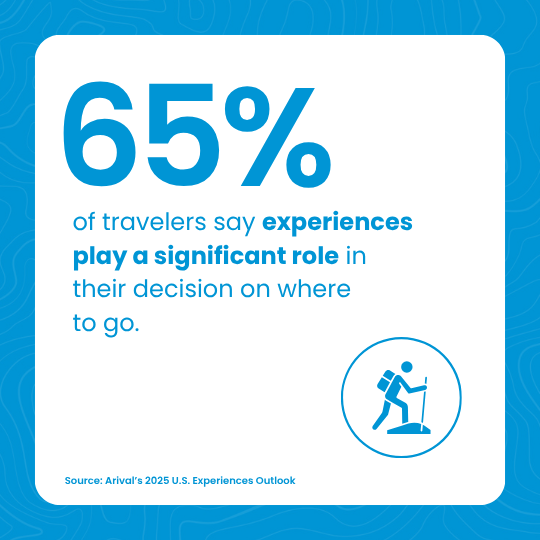
65% of travelers say experiences play a significant role in their decision on where to go.

Experiential marketing is just what it sounds like: using tangible experiences, events and products to showcase the appeal of your destination. It’s all about reaching people offline and in real life, using immersive experiences to foster an emotional connection. 

Here are a few best practices to consider when developing an experiential marketing strategy or launching an in-market activation:

#1: Spotlight your authentic products

This is all about amplifying your authentic differentiators. An activation should do more than simply showcase a logo or hand out swag—it’s a chance to bring a taste of your destination to target audiences. When developing an activation, first identify products, emotions or experiences that truly represent your destination. Lead with what makes you, you. It's tempting to go big and flashy, but the activations that resonate most are rooted in authenticity. 

Ask yourself: What's the one thing your destination can own that no one else in your competitive set can claim?

Ski-bench branded in West Virginia's brand

#2: Pick the right venues and partners

This is about being intentional, not opportunistic. Work with partners that align with your brand values and share your target audiences. These might be local industry partners, non-endemic brands, media outlets or specific events. You can do a lot more together and further amplify your reach. 

And remember, not every high-traffic event is the right fit. A partnership that reaches 5,000 of the right people will outperform one that reaches 50,000 of the wrong audience every time. When you're evaluating partners, ask: Does their audience already have an affinity for what my destination offers? 

#3: Integrate activations into your overall strategy

An activation isn’t just a standalone event; it’s a way to bring your greater marketing strategy to life. Your activations will have the greatest impact if they’re closely tied to seasonal marketing, new brand campaigns or other strategic initiatives.

And don’t let that connection end when the activation does. Be sure to incorporate lead generation opportunities into your plan. If someone spins your prize wheel or takes a photo at your booth and you don't have a way to follow up with them, you've lost the chance to build a relationship. Layer in things like email capture, QR codes, a contest sign-up—whatever makes sense—so you can continue the conversation and nurture that interest into an actual trip.

Lake Charles's Pack All the Joy You Can Activation

#4: Set clear goals and KPIs to track impact

Like any other media channel, activations need to have goals that are closely tied to your strategic marketing initiatives. Identify what you’d like to achieve and set KPIs. Your goals will shape everything, from how you design the activation to how you measure its success.

For example, if your goal is brand awareness, you might track impressions, earned media and post-event recall. If you want to drive visitation, look at booking codes, website traffic spikes from target markets or flight search data. Every activation should be able to answer the question: “What impact did this have, and how can we prove it?"

Want to see how destinations have put these best practices into action? Check out Part 2 of this blog post here.

Get in touch

Let's work together
· Contact Us · Contact Us · Contact Us