What’s Shaping Destination Decisions?

A photo of people on a mountain looking at the ocean.
by Andy Gonzalez
Marketing Coordinator

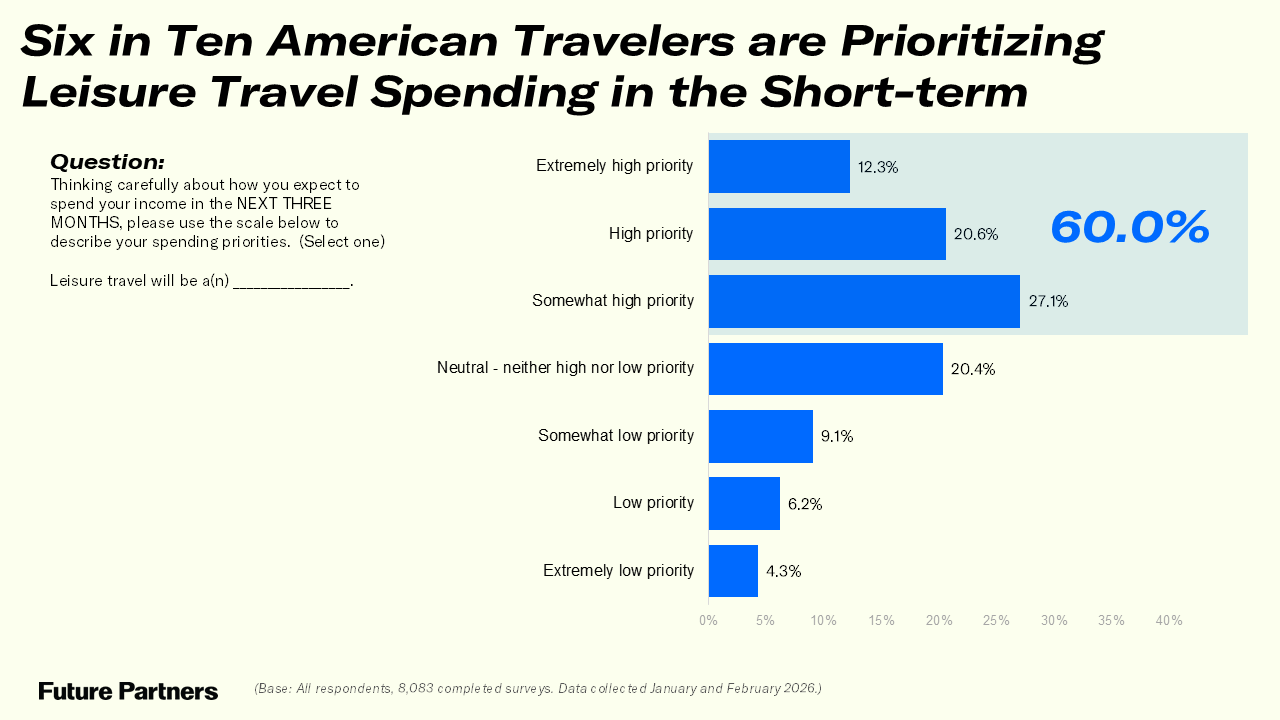
Even amid economic uncertainty, 60% of American travelers say leisure travel is a top spending priority. And they’re backing it up—in the next 12 months, travelers plan to take an average of four trips, up steadily year-over-year since the pandemic. Those were just two of the findings from our annual Destination Decisions webinar with Future Partners, powered by The State of the American Traveler research. The demand is there. But what resources are travelers using to choose destinations? 

Where Travelers Are Looking

When it comes to discovering new destinations, travelers are most receptive to destination messaging through online search (37.8%) and email (31.7%). Other digital channels, including social media, streaming video services and online content, are growing as discovery channels. 
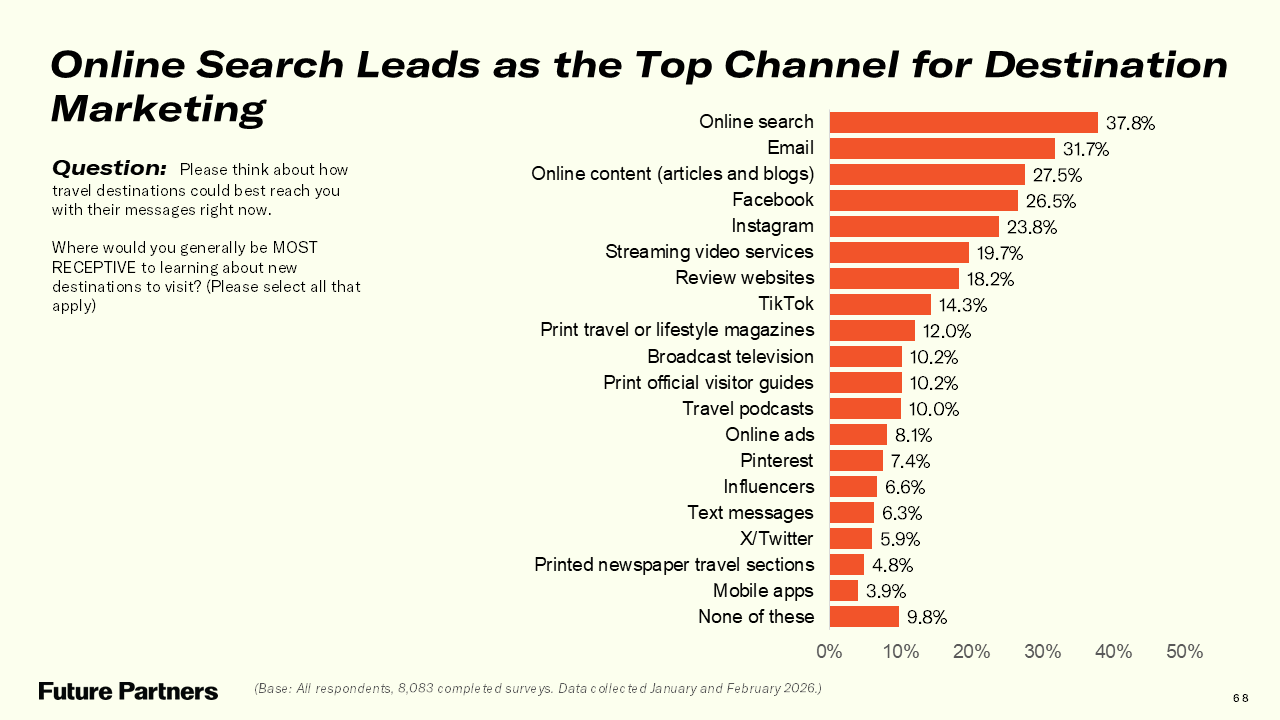
 

A graph showing online search leading as the top channel for destination marketing.

How travelers engage with those channels, however, varies by generation. For example, Gen Z is more receptive to platforms like TikTok, Instagram and YouTube, while Boomers are more likely to discover destinations using online search and email. At the same time, one in four American travelers have also used AI to plan trips in the past year, making AI another channel DMOs need to consider in the discovery process. 

For DMOs, this reinforces the importance of a targeted media strategy to effectively reach their most valuable audience. The channels matter, but so does timing. Understanding what’s motivating travelers right now is just as critical. 

Why Travelers Are Spending

When asked how they expect to spend their income in the next three months, 60% of travelers prioritized leisure travel spending, signaling a window of opportunity for DMOs to capture demand. 

A graph showing Six in Ten American Travelers Prioritizing Leisure Travel Spending in the Short-Term

That demand is also tied to travelers’ personal motivations. 40% of travelers often or always plan leisure trips to support their well-being. Visiting friends or relatives (43.8%), relaxation (36.8%) and escaping daily stress (28.5%) remain among the top motivators for travel. 

For DMOs, this highlights the importance of messaging that emphasizes the emotional benefits of travel, from connection to relaxation and stress relief. And for destinations looking to capture that demand beyond peak season, the data points to a growing opportunity. 

Off-Season & Off the Beaten Track Travelers

Interest in off-season travel is growing as travelers look to avoid peak-season crowds. Nearly half of off-season travelers say they prefer traveling outside of peak periods, compared to just 15.1% who prefer peak-season travel. This shift is driven in part by concerns around overcrowding, with off-season travelers twice as likely as peak travelers to cite crowds as a barrier to travel. 

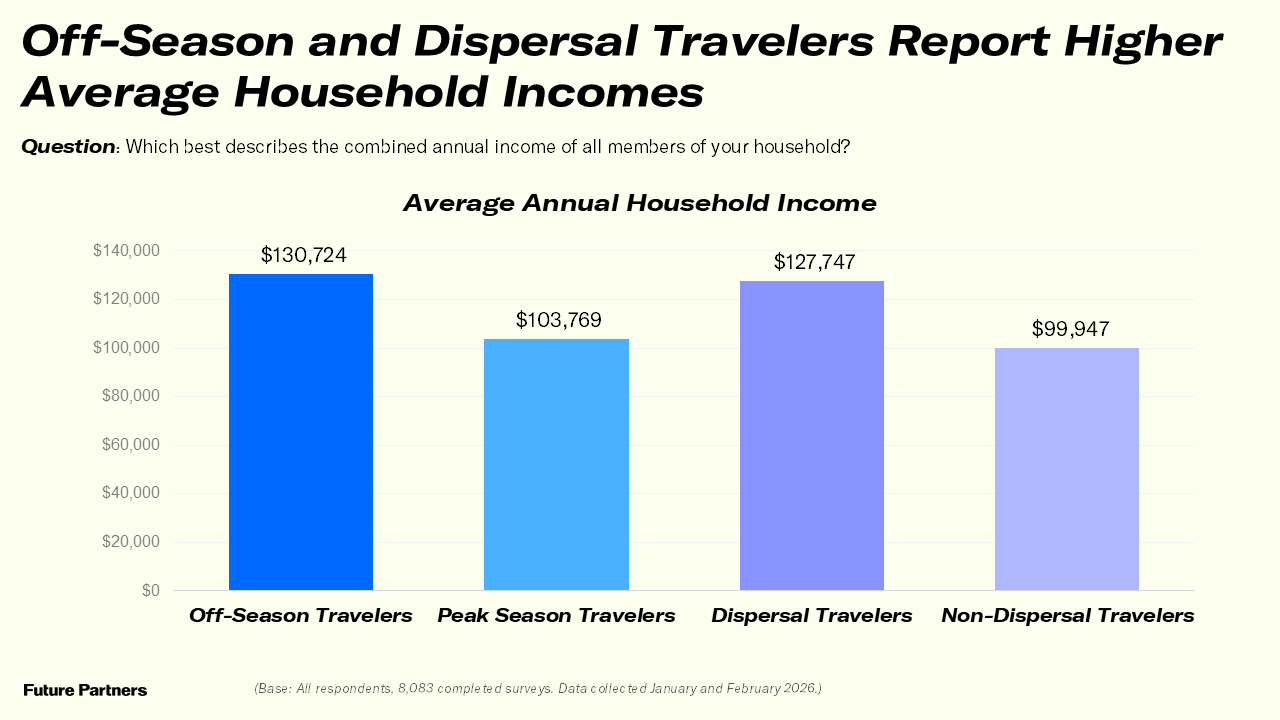
These travelers also tend to take a more intentional approach to their trips. Off-season travelers are more likely to stay longer in one place rather than hopping between destinations, and they typically have higher household incomes than their peak-season counterparts, making them a valuable audience for DMOs. 

A graph showing off-season and dispersal travelers reporting higher average household incomes.

One way DMOs can attract these travelers is to promote off-season and experiences that highlight off-the-beaten-path attractions, shoulder-season events and alternative itineraries. By encouraging visitors to travel beyond peak times and traditional hotspots, destinations can better distribute visitation. 

To explore the full findings, you can access the slide deck, research summary and webinar recording here

For more insights like these, join our upcoming webinars for practical guidance on the latest trends shaping U.S. leisure travel. 

Get in touch

Let's work together
· Contact Us · Contact Us · Contact Us